Please fill out the form below to request a quote or to request more information about us. please be as detailed as possible in your message, and we will get back to you as soon as possible with a response. we're ready to start working on your new project, contact us now to get started.
Noise Reduction and Sound Qualities of Cat-Back Exhaust Systems
2026-09-05
Maxdo
21
Understanding Cat-Back Exhaust Systems
At their core, cat-back exhaust systems are complex assemblies of pipes, catalysts, and other components that redirect exhaust gases through a cat converter. The cat converter, a key element of these systems, contains a stack of alternately arranged catalyst particles and porous metal plates. This setup allows the gases to flow through the converter, which contains microscopic metal particles that remove harmful emissions such as carbon monoxide and nitrogen oxides. The result is a cleaner exhaust system, but the physical structure of the system also plays a significant role in noise reduction and sound quality.
Cat-back exhaust systems come in various forms, including straight-through designs, semi-rotating configurations, and stepped designs. Each design has its own advantages and trade-offs in terms of noise reduction and sound quality. For instance, straight-through systems are often associated with lower noise levels due to their simpler design, while semi-rotating systems offer a balance between noise reduction and a rich, full-bodied sound.
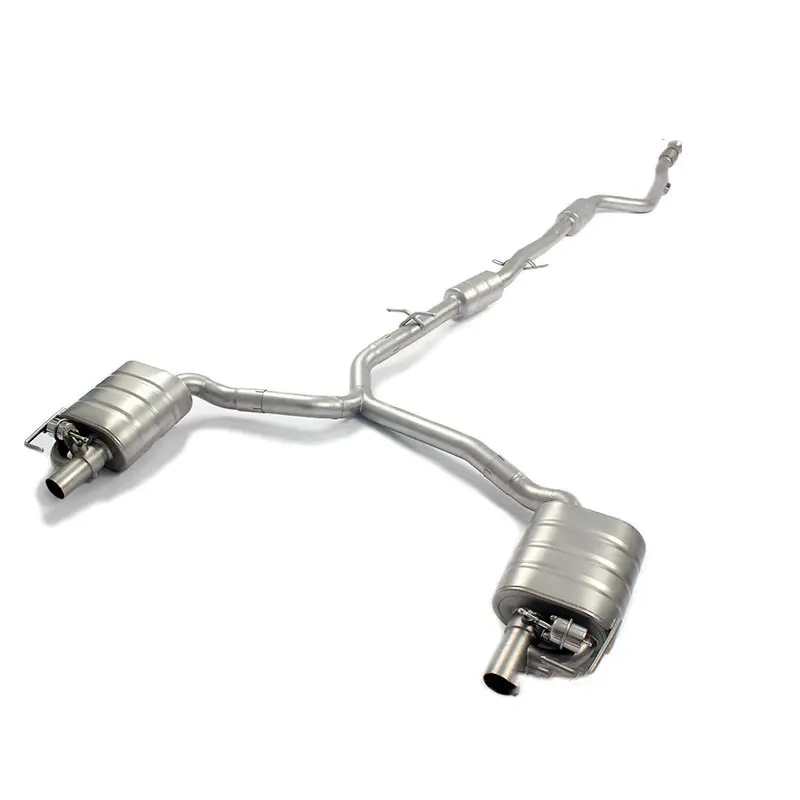
Noise Reduction Mechanisms in Cat-Back Exhaust Systems
The primary mechanism behind noise reduction in cat-back exhaust systems is the physical redirection of exhaust gases through the cat converter. As the gases flow through the converter, they encounter alternating catalyst particles and metal plates, which scatter and absorb the exhaust gases. This scattering process converts a portion of the exhaust's energy into noise-canceling materials, reducing the overall noise level.
The design of the cat-back exhaust system also plays a significant role in noise reduction. For example, stepped designs, which feature a series of smaller pipes connected by steps, are known for their ability to minimize turbulence and scattering of exhaust gases. This design not only enhances noise reduction but also contributes to a more consistent and refined exhaust sound. In contrast, straight-through systems, while simpler, are often associated with higher noise levels due to the lack of steps to manage turbulence.
In addition to the physical design, the choice of materials used in the construction of the cat-back exhaust system also influences noise reduction. High-quality, dense mesh materials are often used in the construction of the catalyst bed, as they provide a larger surface area for the gases to interact with, thereby enhancing noise reduction. These materials are typically made from a combination of metal and carbon fiber, which adds to the system's durability and aesthetic appeal.
Enhancing Sound Quality
While noise reduction is a primary concern in the design of cat-back exhaust systems, sound quality is equally important for drivers who want to experience the unique characteristics of their vehicles' exhaust systems. The interaction between the physical design of the system and the materials used can significantly influence the sound quality, creating a range of tones and pitches that are both visually and aurally appealing.
One of the key factors in enhancing sound quality is the choice of materials used in the construction of the pipes and other components. For instance, certain materials, such as titanium or carbon fiber, are known for their ability to absorb and scatter sound waves, creating a rich and complex sound profile. These materials also contribute to a more durable and lightweight system, making them popular among enthusiasts.
In addition to the choice of materials, the design of the cat-back exhaust system can also be tailored to achieve a specific sound quality. For example, stepped designs are often associated with a full-bodied, powerful sound, while straight-through systems tend to produce a more uniform and refined exhaust tone. Drivers can also customize their exhaust systems by adding features such as resonators, tone controllers, or exotic components, further enhancing the sound quality to suit their personal preferences.
Comparative Analysis: Cat-Back Exhaust vs. Other Exhaust Systems
When comparing cat-back exhaust systems to other types of exhaust systems, such as mid-pipe systems or mufflers, several factors come into play. Cat-back systems are generally more effective at reducing noise, particularly in urban environments where low-frequency noises can be particularlyannoying. They also tend to produce a more pronounced and distinguishable exhaust sound, which can be a desirable feature for drivers who want to stand out from the crowd.
On the other hand, mid-pipe systems are often simpler and more affordable than cat-back systems, making them a popular choice for drivers who want to achieve some level of noise reduction without a significant investment. Mufflers, while effective at reducing high-frequency noise, are typically designed with a focus on aesthetics rather than sound quality, often resulting in a more subdued and uninteresting exhaust tone.
The choice between a cat-back exhaust system and other types of systems ultimately depends on the driver's priorities. Those who prioritize noise reduction and a rich, detailed sound quality will likely prefer cat-back systems, while those who are more concerned with cost and aesthetics may opt for mid-pipe or muffler systems.
Technical Insights: Key Factors in Performance and Sound Quality
The performance and sound quality of a cat-back exhaust system are influenced by a variety of technical factors, including airflow, temperature control, and the materials used in the construction of the system. Understanding these factors can help drivers make informed decisions about the design and construction of their cat-back exhaust systems.
Airflow is a critical factor in the performance of a cat-back exhaust system. Proper airflow ensures that exhaust gases are evenly distributed through the cat converter, maximizing the noise-reducing properties of the system. Additionally, airflow affects the overall power output of the vehicle, as restricted airflow can lead to a loss of power, while optimal airflow can enhance power delivery.
Temperature control is another important factor in the performance of a cat-back exhaust system. High temperatures can degrade the performance of the catalyst particles in the converter, reducing the system's ability to reduce noise and improve power output. drivers who live in areas with extreme temperatures may need to consider additional components, such as heat exchangers or cooling systems, to maintain optimal performance.
The choice of materials used in the construction of the cat-back exhaust system also plays a significant role in both performance and sound quality. materials that are lightweight yet durable, such as titanium or carbon fiber, can enhance the system's performance by reducing weight and improving strength, while materials that are designed for sound absorption, such as dense mesh, can enhance the system's sound quality.
Application and Maintenance
Installing a cat-back exhaust system is a process that requires careful attention to detail to ensure optimal performance and durability. The installation process typically involves removing the existing catalytic converter, installing the cat-back system, and reconnecting the engine and transmission. drivers should ensure that the installation is done correctly to avoid any issues with noise reduction or power output.
Maintenance is also an important aspect of owning a cat-back exhaust system. The catalyst particles in the converter need to be cleaned or replaced periodically to maintain the system's performance and effectiveness in noise reduction. drivers should also ensure that the system is properly insulated and cooled to avoid any degradation of the materials over time.
Benefits of Opting for Cat-Back Exhaust Systems
In conclusion, cat-back exhaust systems offer a range of benefits for drivers who are looking to enhance both the performance and sound quality of their vehicles. These systems are effective at reducing noise, particularly in urban and densely populated areas, while also providing a rich and engaging exhaust sound that can be customized to suit individual preferences. Whether you're a car enthusiast or a first-time vehicle builder, cat-back exhaust systems provide a wealth of opportunities for creativity and innovation, allowing you to build a vehicle that reflects your unique style and lifestyle.
Table of Contents
GET IN TOUCH WITH Us
recommended articles
Copyright © 2026 Shenzhen Maxdo Automotive Parts Co., Ltd. - www.maxdoexhaust.com | Sitemap | privacy policy